
That Loud Garage Door Isn't Just an Annoyance
If you've ever cringed at the sound of your garage door grinding, squealing, or rattling every time it opens or closes, you're not alone. Noisy garage doors are one of the most common complaints we hear from homeowners across Oklahoma City, and for good reason — the sound can echo through your entire house, wake up sleeping kids, and drive your neighbors crazy.
But here's the thing most people don't realize: a noisy garage door is often trying to tell you something. Those sounds aren't random. Each type of noise can point to a specific issue, and ignoring it can lead to costly repairs or even a complete garage door failure down the road.
Let's break down the most common garage door noises, what they mean, and what you should do about them.
Grinding or Scraping Sounds
A grinding or scraping noise usually means metal is rubbing against metal somewhere in the system. This is one of the more serious sounds you can hear because it often indicates:
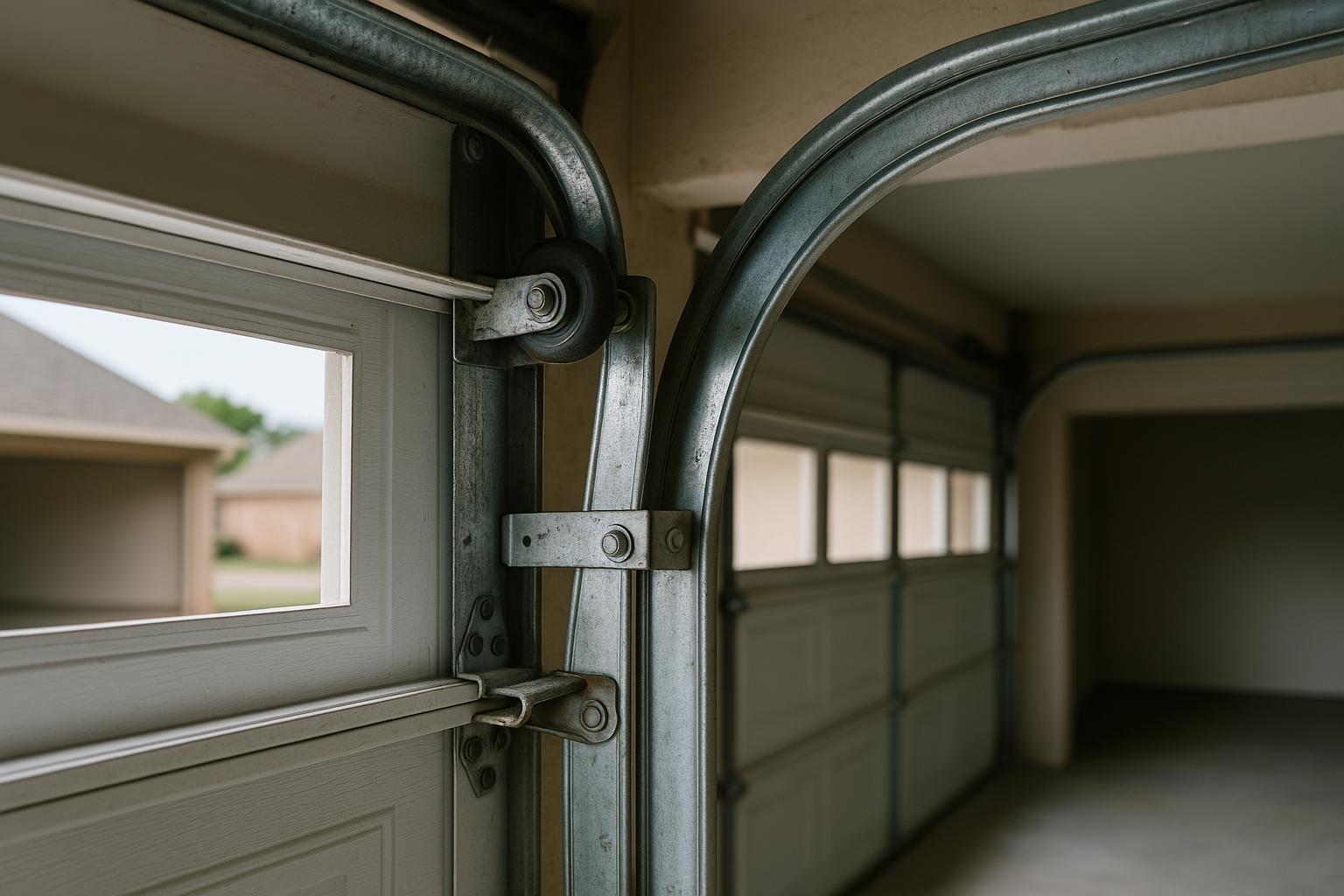
- Worn-out rollers: Steel rollers can wear down over time and start grinding against the track. If your rollers are original to the door and more than five to seven years old, they're likely the culprit.
- Misaligned tracks: If the vertical or horizontal tracks have shifted even slightly, the door can scrape against them as it moves. This puts stress on the entire system and can cause the door to get stuck.
- Damaged hinges: When hinges wear out, the sections of your door don't fold smoothly, creating a grinding noise at the joints.
If you're hearing grinding sounds, it's best to stop using the door and have it inspected. Continuing to operate a misaligned or grinding door can cause damage that turns a simple repair into a full replacement.
Squealing or Squeaking
High-pitched squealing or squeaking is usually a lubrication issue. Your garage door has dozens of moving parts — rollers, hinges, springs, bearings, and the opener chain or belt — and they all need proper lubrication to function quietly.
Oklahoma City's climate doesn't make things easy, either. Our hot summers dry out lubricant faster than you'd expect, and dust and debris from Oklahoma winds can gum up the works. If you haven't lubricated your garage door hardware in the past six months, that's a good place to start.
Here's what to do:
- Use a silicone-based or lithium-based garage door lubricant — not WD-40, which is a solvent and not a long-term lubricant.
- Apply it to the rollers, hinges, springs, and the opener's rail or chain.
- Open and close the door a few times to work the lubricant into the moving parts.
If the squealing continues after lubrication, the rollers or bearings may be worn beyond the point where lubrication can help, and they'll need to be replaced.
Rattling or Vibrating
A rattling garage door often points to loose hardware. Over thousands of open-and-close cycles, nuts, bolts, and screws can gradually vibrate loose. This is especially common in older homes around the OKC metro where garage doors have been in service for a decade or more.
Check the following:
- Track brackets: These hold the tracks to the wall and ceiling. If they're loose, the whole track can vibrate when the door moves.
- Hinge bolts: Each hinge is held in place by bolts that can loosen over time.
- Opener mounting hardware: If your garage door opener is vibrating excessively, the bolts securing it to the ceiling bracket may need tightening.
- Chain tension: A loose chain on a chain-drive opener will slap and rattle during operation. Adjusting the tension can often solve this immediately.
Tightening loose hardware is something many homeowners can handle with a socket wrench, but be careful around the spring system and cables — those components are under extreme tension and should only be handled by a trained technician.
Popping or Banging Sounds
If your garage door makes a loud pop or bang — especially when it first starts moving — the issue is often related to the torsion springs. Springs build up tension as the door closes, and if they're wearing unevenly or haven't been properly adjusted, they can release that tension abruptly, creating a startling bang.
A popping sound can also come from:
- Rollers popping out of the track: This is a safety hazard and needs immediate attention.
- Panels flexing: Older or damaged panels can bow under pressure and pop as they straighten out during movement.
Popping and banging noises should never be ignored. They often signal that a component is close to failure, and a failing garage door component — especially a spring — can cause serious injury or property damage.
Humming Without Movement
If you press the button on your garage door opener and hear a humming or buzzing sound but the door doesn't move, the opener's motor is running but can't move the door. Common causes include:
- A broken spring: Without functioning springs to counterbalance the door's weight, the opener motor simply can't lift it.
- A stripped gear inside the opener: The main drive gear in your opener can wear out, especially in older units. The motor runs, but nothing engages.
- The door is locked or obstructed: It sounds simple, but sometimes the manual lock has been engaged accidentally, or something is blocking the door from moving.
Running the opener motor against a door it can't move will burn out the motor quickly, so disconnect the opener from the door until the issue is diagnosed.
When to Call a Professional
Some garage door noises have simple fixes — a little lubricant or a tightened bolt can make a world of difference. But many noises are symptoms of problems that require professional tools, training, and replacement parts to fix safely.
Here's a good rule of thumb: if lubrication and tightening visible hardware doesn't solve the noise within a day or two, it's time to call in a professional. And if you hear any sudden, loud sounds like banging or snapping, stop using the door immediately.
At Oklahoma City Door & Opener, we troubleshoot noisy garage doors every day for homeowners in Edmond, Yukon, Bethany, Warr Acres, The Village, and throughout the Oklahoma City metro. We'll pinpoint the exact source of the noise, explain your options clearly, and get your door running smoothly and quietly again.
Don't Wait Until the Noise Becomes a Breakdown
A noisy garage door is easy to live with — until it isn't. The sounds that seem like minor annoyances today can turn into major repairs tomorrow. The good news is that most noise-related issues are affordable to fix when caught early.
If your garage door has been getting louder, don't just turn up the radio and hope for the best. Give us a call or schedule a service appointment. We'll show up on time, figure out what's going on, and get your garage door back to running the way it should — quietly and reliably.