
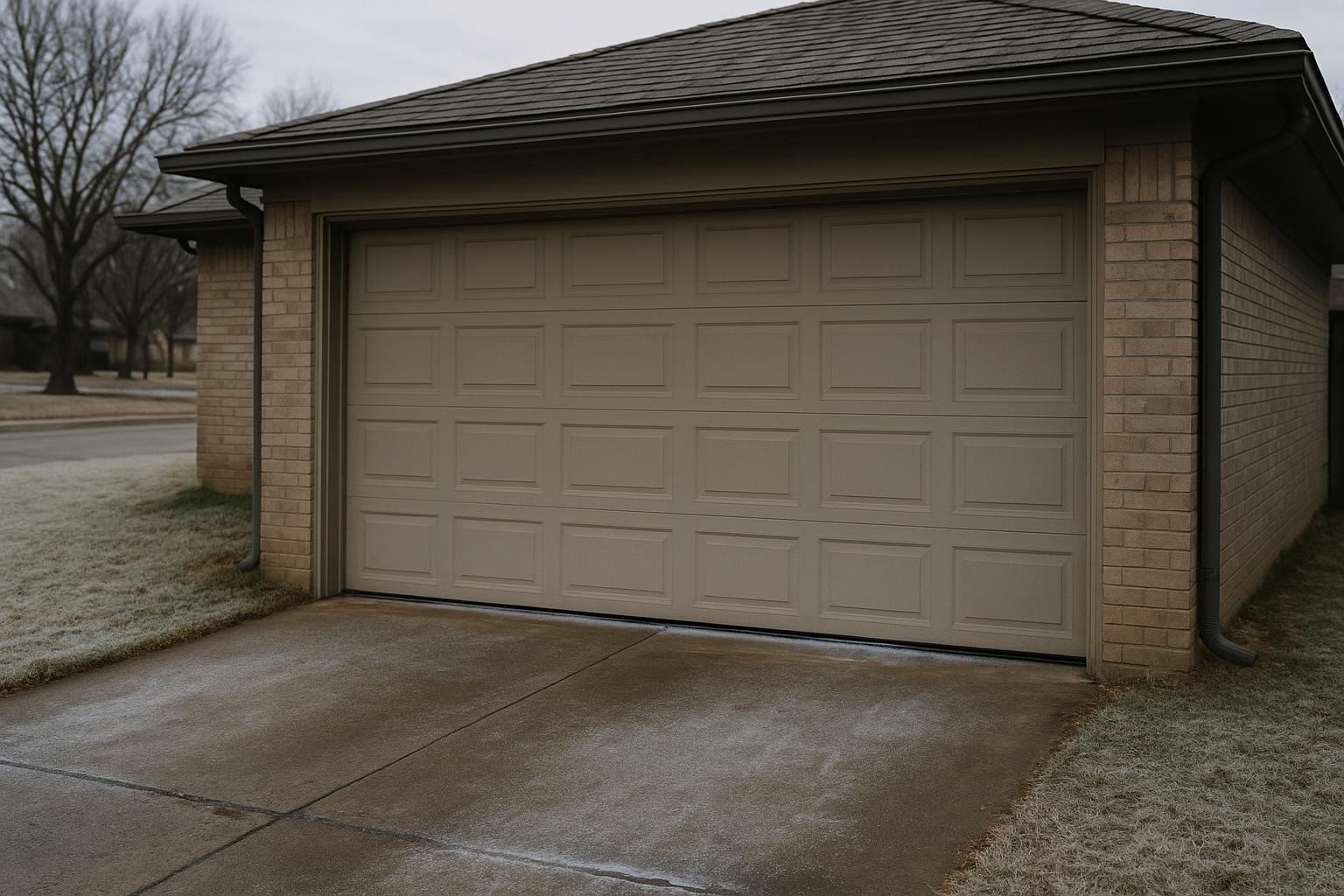
Why Cold Weather and Garage Doors Don't Always Get Along
Oklahoma City may not get the brutal winters that states further north experience, but our cold snaps can be intense. When temperatures drop into the teens or single digits — which happens more often than newcomers expect — garage doors can suddenly refuse to open, move sluggishly, or make alarming noises. If you've ever been running late on a freezing morning only to find your garage door stuck, you know how frustrating it can be.
The good news is that most cold-weather garage door problems have straightforward causes and solutions. Let's walk through the most common issues and what you can do about them.
The Weatherstripping Is Frozen to the Ground
This is the number one reason garage doors won't open during an Oklahoma City cold snap. The rubber weatherstripping along the bottom of your door is designed to create a tight seal against the garage floor, keeping out drafts, rain, and pests. But when moisture collects under that seal and temperatures plummet overnight, the rubber can literally freeze to the concrete.
How to Fix It
- Don't force it. If your garage door opener is straining against a frozen seal, stop. Forcing the door open can tear the weatherstripping, damage the opener's motor, or strip the gears inside the unit.
- Apply heat carefully. Use a hair dryer or heat gun on a low setting to gently warm the area where the seal meets the floor. You can also pour warm (not boiling) water along the base of the door to melt the ice.
- Break the seal manually. From inside the garage, try gently tapping along the bottom of the door with a flat tool to break the ice bond without damaging the seal.
How to Prevent It
Before the next freeze, apply a thin layer of silicone-based lubricant or cooking spray along the bottom weatherstripping. This creates a barrier that prevents moisture from bonding the rubber to the concrete. If your weatherstripping is old, cracked, or warped, replacing it before winter is a smart investment.
Metal Components Have Contracted
Garage doors rely on a system of metal tracks, springs, hinges, and rollers. When temperatures drop significantly, metal contracts. This contraction can cause tracks to become slightly misaligned, springs to lose tension, and hinges to stiffen. The result is a door that moves unevenly, makes grinding sounds, or won't open at all.
In most cases, the door will return to normal operation once temperatures rise. But if you're noticing persistent issues — especially strange noises or jerky movement — it's worth having a professional inspect the system. Repeated thermal cycling can accelerate wear on components that are already aging.
Your Garage Door Opener's Lubricant Has Thickened
The grease and lubricant on your garage door's moving parts can thicken or harden in cold weather, especially if a petroleum-based product was used. When lubricant becomes too viscous, rollers don't glide smoothly, the chain or belt drive struggles, and the opener motor has to work much harder than it should.
What You Should Do
Switch to a silicone-based or lithium-based garage door lubricant. These products are specifically formulated to perform well across a wide temperature range. Apply lubricant to the rollers, hinges, tracks, and the opener's chain or screw drive at least twice a year — ideally before summer and before winter.
The Opener's Logic Board Is Affected by Cold
Modern garage door openers contain electronic circuit boards that can be sensitive to extreme temperature swings. If your garage is uninsulated or detached, the temperature inside can drop low enough to cause the logic board to behave erratically. Symptoms include the opener's lights flashing without the door moving, the remote working intermittently, or the door opening partway and stopping.
If you suspect an electronic issue, try disconnecting the opener from power for 30 seconds and then plugging it back in. This can reset the board. If the problem persists when temperatures are consistently cold, the board may need to be replaced — or it may be time to consider insulating your garage.
Dead Batteries in Your Remote or Keypad
This one catches a lot of people off guard. Cold weather drains batteries faster than warm weather. If your wall-mounted keypad or car remote suddenly stops working on a cold morning, the batteries may simply be dead or too cold to deliver enough power.
Replace the batteries and see if that solves the problem. For exterior keypads, consider using lithium batteries, which perform significantly better in cold conditions than standard alkaline batteries.
The Garage Door Itself Is Misaligned
Repeated freezing and thawing cycles can cause your garage's concrete slab to shift slightly over time. Here in Oklahoma City, our expansive clay soils are already prone to movement with changes in moisture levels, and winter weather only adds to the problem. If the floor shifts, the door may no longer sit flush against it, or the tracks may become slightly out of alignment.
Signs of misalignment include visible gaps along the bottom of the door, the door rubbing against one side of the track, or difficulty latching the door when it's fully closed. Track realignment is a job best left to a professional, since improperly adjusted tracks can cause the door to fall or the cables to come off the drums.
When to Call a Professional
Some cold-weather garage door issues are simple DIY fixes — replacing batteries, applying lubricant, or melting ice along the bottom seal. But others require a trained technician. You should call a professional if:
- The door is visibly off-track or sagging to one side
- You hear loud popping or snapping sounds when the door moves
- The opener motor runs but the door doesn't move at all
- Springs appear stretched, damaged, or broken
- The door falls rapidly when you try to close it manually
Attempting to repair springs, cables, or tracks without the right tools and training can result in serious injury. These components are under extreme tension and should only be handled by experienced technicians.
Prepare Your Garage Door Before the Next Cold Snap
Oklahoma City weather can shift fast. One day it's 60 degrees, and the next morning there's ice on everything. The best way to avoid cold-weather garage door headaches is with a little preventive maintenance before temperatures drop.
- Lubricate all moving parts with a cold-weather-rated silicone or lithium spray.
- Inspect and replace worn weatherstripping along the bottom and sides of the door.
- Test the door's balance by disconnecting the opener and lifting the door manually. It should stay in place when opened halfway. If it doesn't, the springs may need adjustment.
- Check the batteries in your remotes and keypads.
- Schedule a professional maintenance visit to catch small problems before they become expensive repairs.
At Oklahoma City Door & Opener, we help homeowners across the OKC metro — including Edmond, Yukon, Bethany, Warr Acres, and The Village — keep their garage doors running smoothly all year long. Whether you need an emergency repair on a freezing morning or want to schedule a seasonal tune-up, our team shows up on time and gets the job done right. Give us a call, and let's make sure your garage door is ready for whatever Oklahoma weather throws at it.