
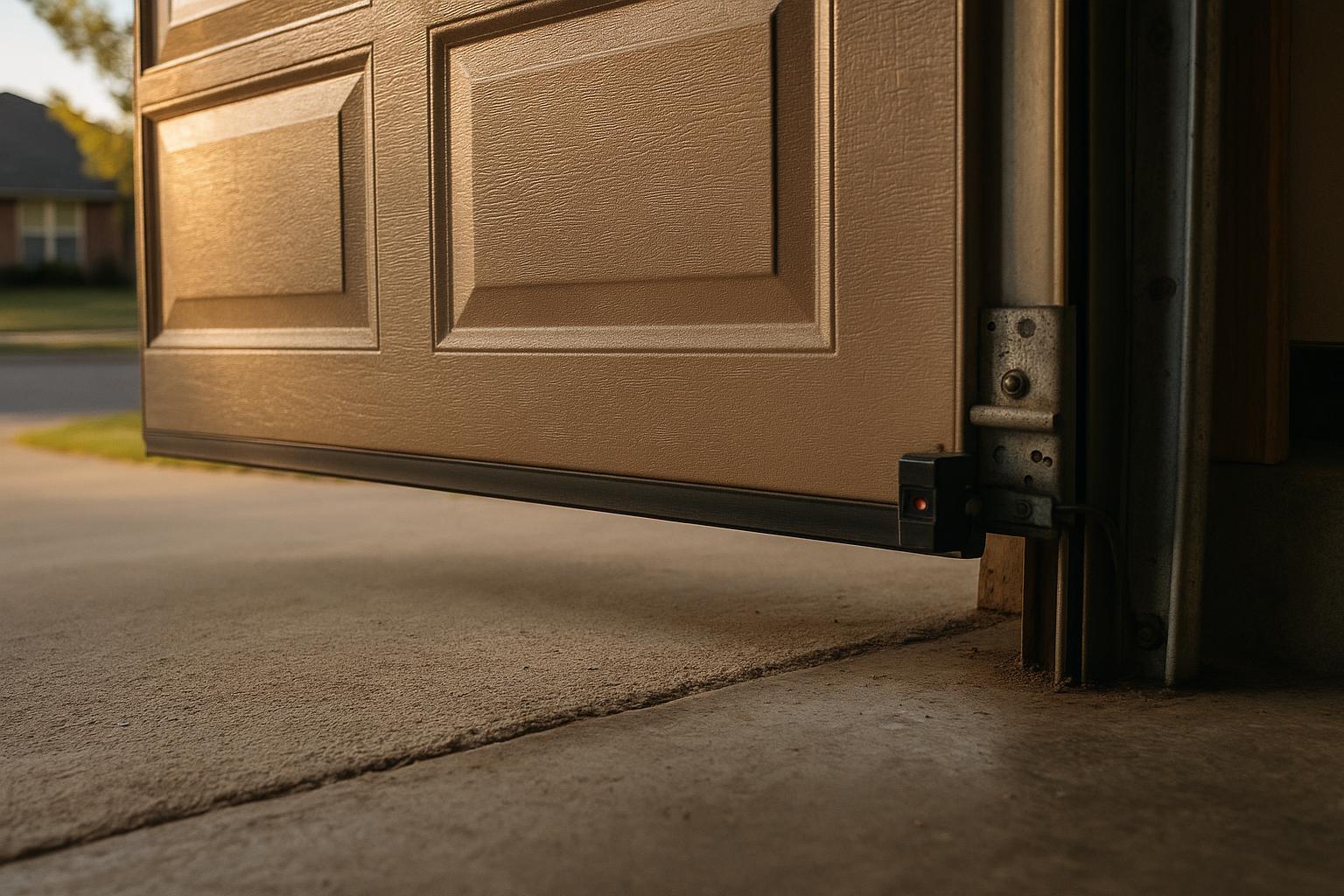
A Common and Frustrating Garage Door Problem
You press the button on your garage door remote, the door begins to close, and then — just before it reaches the floor — it stops and reverses back up. You try again. Same thing. Maybe it works on the third try, maybe it doesn't. Either way, you're left standing in your driveway wondering what's going on.
This is one of the most common garage door issues homeowners in Oklahoma City deal with, and it's more than just an annoyance. A door that won't fully close leaves your home vulnerable to weather, pests, and security risks. The good news is that the cause is usually identifiable, and in many cases, fixable without replacing your entire system.
Let's walk through the most likely reasons your garage door reverses before hitting the floor and what you can do about each one.
1. Misaligned or Dirty Safety Sensors
This is the number one cause of a garage door that reverses unexpectedly. Every garage door opener manufactured after 1993 is required to have photo-eye safety sensors mounted near the bottom of the door tracks on each side. These sensors send an invisible beam across the opening. If anything breaks that beam — a trash can, a bike, a leaf, or even direct sunlight — the door interprets it as an obstruction and reverses.
Here's what to check:
- Alignment: Both sensors need to face each other directly. If one gets bumped or shifts, the beam is broken and the door won't close. Look for a steady green light on both sensors. A blinking light usually means they're out of alignment.
- Dirt and debris: Wipe the lenses on both sensors with a soft cloth. Oklahoma City's wind and dust storms can coat those lenses faster than you'd think.
- Wiring: Check that the wires running from the sensors to the opener unit haven't been damaged, chewed by pests, or disconnected.
If cleaning and realigning the sensors doesn't solve the problem, the sensors themselves may need to be replaced.
2. Incorrect Close-Limit Settings
Your garage door opener has limit settings that tell the motor how far the door should travel when opening and closing. If the close-limit setting is off, the opener may think the door has hit something when it reaches the floor, triggering the auto-reverse safety feature.
This often happens after a new opener installation or when the settings get bumped accidentally. Most openers have adjustment screws or digital controls on the motor unit. You can usually find instructions in the owner's manual for making small adjustments. Turn the close-limit screw in small increments and test the door after each adjustment.
If you're not comfortable making these adjustments yourself, a professional can dial in the correct settings in just a few minutes.
3. Problems with the Garage Door Track
The metal tracks that guide your garage door up and down need to be clean, properly aligned, and free of dents or obstructions. If the track is bent, has debris lodged in it, or has shifted out of alignment, the door can bind or encounter resistance as it closes. When the opener senses that resistance, it reverses.
Visually inspect both tracks from top to bottom. Look for:
- Visible bends or dents in the metal
- Gaps between the track and the wall or ceiling brackets
- Dirt, gravel, or small objects sitting in the track
Minor debris can be cleaned out easily. But bent tracks or mounting issues should be handled by a technician to avoid making the problem worse.
4. Worn or Broken Springs
Your garage door springs do the heavy lifting — literally. They counterbalance the weight of the door so the opener motor doesn't have to work as hard. When a spring is worn, weakened, or broken, the door becomes much heavier than the opener expects. This added resistance can trigger the auto-reverse function.
Signs of spring trouble include:
- The door feels unusually heavy when you try to lift it manually
- You hear a loud bang from the garage (a spring breaking)
- The door opens unevenly or looks crooked
- Visible gaps in the spring coils
Important: Garage door springs are under extreme tension and are dangerous to work with. Spring replacement is not a DIY job. If you suspect a spring issue, call a professional. Here in the OKC metro area, we handle spring replacements regularly for homeowners in Edmond, Yukon, Bethany, and throughout Oklahoma City.
5. Worn Rollers or Hinges
Over time, the rollers that travel along the tracks and the hinges that connect the door panels can wear out. Worn rollers create friction and resistance. Seized or rusted rollers can cause the door to jerk or stall during operation, which the opener may interpret as an obstruction.
Nylon rollers tend to last longer and operate more quietly than steel rollers. If your rollers are visibly worn, cracked, or no longer spin freely, it's time to have them replaced. This is a relatively affordable maintenance item that can prevent bigger problems down the road.
6. Issues with the Opener Itself
If you've checked everything else and the door still reverses, the problem may be with the opener's logic board or motor. Electrical surges — which aren't uncommon during Oklahoma's storm season — can damage the control board. An aging motor may also struggle to move the door smoothly, causing erratic behavior.
Signs the opener may be the issue:
- The opener makes grinding or humming noises but the door barely moves
- The remote and wall button both produce the same reversing behavior
- The opener light blinks a specific number of times (this is often an error code — check your manual)
In some cases, a logic board replacement can fix the problem. In others, especially with openers that are 15 years old or more, replacing the entire unit is the more cost-effective choice.
When to Call a Professional
Some of these fixes — cleaning sensors, clearing track debris — are safe for most homeowners to handle. But anything involving springs, tracks, cables, or electrical components carries real risk. Garage doors are the largest moving object in most homes, and working on them without the right tools and experience can lead to injury or further damage.
If your garage door keeps reversing and you can't pinpoint the cause, or if you've identified a problem that's beyond a simple fix, it's time to bring in help. At Oklahoma City Door & Opener, we diagnose and repair these issues every day for homeowners across the metro, from Warr Acres to The Village and everywhere in between. We'll find the problem, explain your options, and get your door working properly again.
Don't Ignore a Reversing Garage Door
A garage door that won't close all the way isn't just inconvenient — it's a security and safety concern. Whether it's a sensor issue, a worn spring, or a failing opener, the problem won't fix itself. Addressing it early usually means a simpler and less expensive repair.
If you're dealing with a garage door that keeps reversing in Oklahoma City or the surrounding area, give us a call. We'll get it sorted out.